When Motivation Runs Out: Why Consistency Is a System, Not a Personality Trait
Think about the last time you said you were going to do something for someone on your team — and you didn't. Not because you forgot. Because the week got away from you. Because something more urgent came up. They probably didn't even say anything. But something shifted. Not dramatically. Something small. Something quiet.
And that is how it starts. Not with one big failure. One commitment at a time.
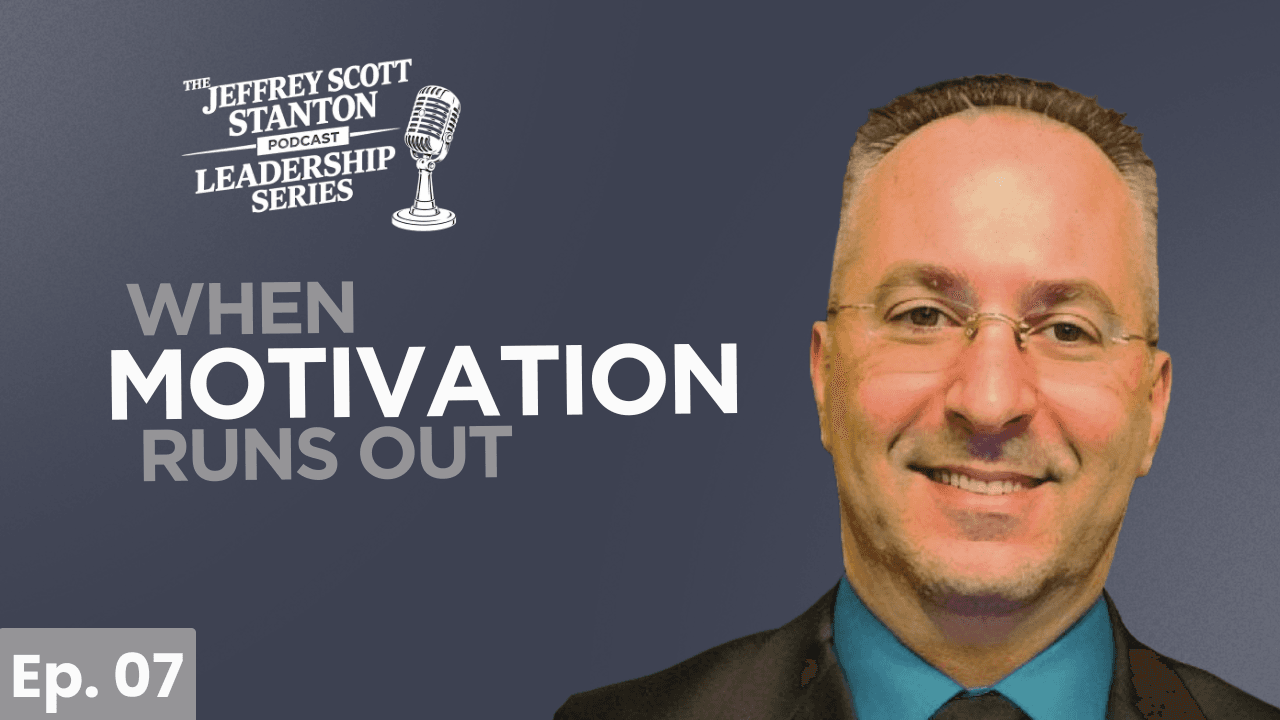
Episode 7 of The Leadership Series draws on James Clear's Atomic Habits, but it goes beneath the habit framework most readers remember and into the three ideas that actually drive lasting behavioral change in leadership: the identity question, the compounding principle, and the valley — the stretch where you are doing everything right and nothing seems to be working.
Consistency Is a Systems Problem, Not a Motivation Problem
The premise of the episode cuts against how most leaders diagnose their own inconsistency. When the coaching cadence slips or the one-on-ones stop happening, the default explanation is motivational: I need to want it more. I need more discipline.
Clear's research says otherwise, and Jeffrey applies it directly: consistency is not a personality trait. It is not something you either have or you don't. It is a practice built through systems and sustained through identity. Clear's most quoted line is the anchor of the entire episode: you do not rise to the level of your goals — you fall to the level of your systems.
Jeffrey makes the diagnosis personal with the story of Marcus, a leader whose team quietly learned not to depend on him. Nothing dramatic ever happened. He simply became someone whose commitments were probabilistic. And the compounding worked in reverse.
"From the inside, it always looks like a reasonable exception. From the outside, it's just your pattern."
— Jeffrey Scott Stanton
The Identity Shift
The most important idea in the episode is Clear's concept of identity-based habits, translated into leadership. There is a difference between a leader who intends to be consistent and a leader for whom consistency is part of who they are. Intentions negotiate. Identity does not.
Jeffrey adapts Clear's voting metaphor for the leadership seat: every action is a vote for the kind of leader you are becoming. Not the leader you want to be someday. The one you are becoming right now, one kept or broken commitment at a time.
"When pressure is high and Wednesdays are hard, the identity holds when the intention does not."
— Jeffrey Scott Stanton
The Valley: Where Most Leaders Quit
Clear calls it the plateau of latent potential. Jeffrey calls it the valley: the period between when consistent behavior begins and when visible results appear. You start doing the weekly one-on-ones. You keep the coaching cadence. And for weeks, sometimes months, nothing measurably changes. This is exactly where most leaders quit — and Jeffrey shares his own story of nearly abandoning a practice two months before it crossed the threshold.
What is actually happening in the valley is that the compounding is accumulating beneath the surface. Jeffrey uses the image of heat applied to ice: one degree made all the visible difference, but the heat was working the entire time.
Three Systems That Work in Real Estate
The back half of the episode gets specific with three systems built for how brokerage leadership actually operates.
The commitment rule. A notebook, not a phone. Every commitment made to a team member gets written down in one place, reviewed daily. The point is not organization. The point is that a commitment casually made and forgotten costs more than one never made at all.
The weekly leadership audit. One question, every Friday: where did my behavior this week match what I said, and where did it not? Five minutes. The pattern only becomes visible when you look for it on a schedule, because — as Jeffrey notes from the self-assessment research — the same pattern that produces inconsistent behavior also distorts how you perceive it afterward.
Environment design. Structure the conditions so consistent behavior is the default, not a daily decision. Marcus, revisited later in the episode, solved two years of inconsistency with a single environmental change — not more willpower, a different default.
What Inconsistency Actually Costs
The episode closes its case with Christine: three years of built trust, quietly eroded one unkept commitment at a time, until her team started treating her commitments as intentions. Nice to hear. Not worth planning a day around.
"Nobody quits on a leader who never shows up. They quit on the leader who showed up for them and then suddenly stopped."
— Jeffrey Scott Stanton
That is the real stake. Your team is not grading you on brilliance. They are deciding, based on your pattern, whether your word is something they can build on.
"Your team needs a leader who is not excellent sometimes. They need a leader who is reliable all the time. Not perfect. Reliable."
— Jeffrey Scott Stanton
The Monday Move: One System, Not One Goal
Your Monday Move: pick one thing to install this week — not a goal, a system. Start the commitment notebook. Put the Friday audit question on your calendar. Redesign one piece of your environment so the leadership behavior you keep intending happens by default. Specific, behavioral, repeatable. It will change how the people around you experience your leadership more than anything else you do this quarter.
Listen & Watch the Full Episode
Jeffrey Scott Stanton goes beneath the habit framework and into identity, compounding, and the valley on The Leadership Series. Available on YouTube and all your favorite audio platforms — Apple Podcasts, Spotify, Amazon Music, and more. New episodes every Wednesday.
About Jeffrey Scott Stanton
Jeffrey Scott Stanton is a Master NLP Practitioner, Behavioral Strategist, and Executive Advisor. Former EVP of Learning & Development at Douglas Elliman Real Estate. He hosts The Leadership Series on J Squared Podcast Productions, a leadership academy in podcast form built for brokers, managers, and high performers responsible for results through others.
- Website: jeffreyscottstanton.com
- LinkedIn: linkedin.com/in/jeffreyscottstanton
Listen to this episode
Work With JMan
Bring this energy to your team or event.
JMan speaks, trains, and builds AI strategies for businesses that want to move faster. See how he can help yours.
Visit jmanai.com →