Being Needed Is Not the Same as Being Effective: What Real Leadership Actually Requires
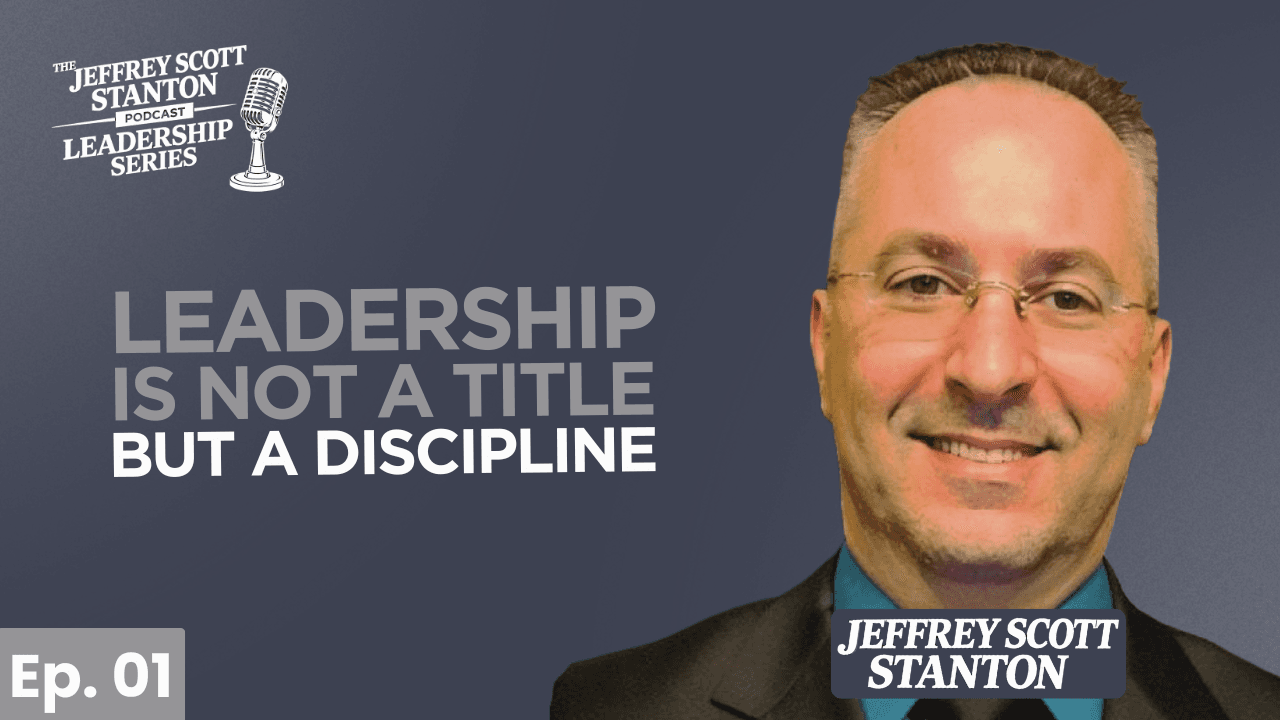
Jeffrey Scott Stanton has spent decades inside some of the most demanding sales environments in real estate. He served as Executive Vice President of Learning and Development at Douglas Elliman. He has coached brokers, built teams, and worked alongside leaders at every level of the industry. And in the first episode of The Leadership Series, he opens with something that cuts straight through the noise.
Leadership is not about being needed. It is about building something that works without you. That distinction sounds simple. Most leaders miss it entirely.
The Producer Trap: Why Great Agents Make Difficult Leaders
The most common leadership failure in real estate is not ego or incompetence. It is misidentification. A top producer gets results. Numbers go up. The brokerage grows. And so the producer gets promoted, handed a team, and told to lead.
The problem is that production and leadership are not the same skill set. What works when you are responsible for yourself does not automatically transfer when you are responsible for others. Personal production runs on individual drive, personal systems, and direct execution. Leadership runs on communication, consistency, emotional intelligence, and the ability to create conditions where other people can succeed.
"What makes someone a great producer does not make them a great leader. It is a different skill set."
— Jeffrey Scott Stanton
The shift requires more than a change in role. It requires a change in how you define your own value. And for many leaders, that is one of the hardest adjustments they will ever make.
Leadership Is Influence, Not Authority
This matters particularly in real estate, where most of the people you lead are independent contractors. They do not have to follow you. They can stay, leave, produce quietly, or disengage without ever saying a word. The only leadership lever that actually works in this environment is credibility.
Jeffrey draws a clear line between bosses and leaders. Bosses rely on position, authority, and title. Leaders rely on influence. Bosses react to problems. Leaders set standards that prevent chaos before it starts. Bosses tell people what to do. Leaders create clarity around what matters and why it matters, so people can make good decisions on their own.
That credibility is not built in big moments. It is built in small, consistent ones: how you communicate during uncertainty, how you respond when things go sideways, how reliably you follow through on what you said you would do, and whether you address behavior directly or avoid it.
"Leadership in this environment is not about control. It is about credibility. It is not about authority. It is about trust."
— Jeffrey Scott Stanton
Whatever You Tolerate Becomes a Standard
One of the most important leadership concepts Jeffrey addresses in this episode is the gap between stated standards and reinforced ones. Leaders often say they expect professionalism, accountability, and high performance. But those expectations, if left vague and inconsistently enforced, become invisible.
Over time, confusion fills the gap. And confusion always gets interpreted as permission.
The teams and organizations that struggle most are not the ones where leadership said the wrong thing. They are the ones where leadership said nothing, where behavior that undermined standards was noticed but never addressed, where good work went unacknowledged, and where the standard on the wall and the standard on the floor were two completely different things.
"Whatever you tolerate becomes a standard. Not what you say. Not what you write down. Not what is on the wall. It is what you tolerate."
— Jeffrey Scott Stanton
Addressing behaviors early is not harsh. Jeffrey makes this point clearly. Addressing behavior directly is respectful. It respects the standard, the team, and the individual. Leaders who avoid discomfort in the short term create dysfunction in the long term.
Self Leadership: Your Calendar Is Your Leadership Document
Before a leader can effectively lead others, they have to lead themselves. And for Jeffrey, self-leadership comes down to one thing above everything else: discipline. Discipline with time. Discipline with communication. Discipline with emotional responses.
The calendar is where this shows up most clearly. If leadership only happens when there is time left over, the team feels it. If coaching is sporadic, people feel it. If standards are only addressed when something breaks, the message is clear: leadership is optional. And optional leadership feels marginal, because it is.
Effective leaders do not wait for time to lead. They create time to lead. They schedule it and protect it the same way they protect a major client meeting or a high-stakes negotiation. Leadership is a responsibility, not an interruption.
Emotional regulation is part of this too. Jeffrey is direct about what teams actually need from their leaders, especially during uncertainty. They do not need a leader who has all the answers. They need a leader who is steady. When the leader is anxious, the team becomes anxious. When the leader is reactive, the team becomes unsettled. Stability comes from consistency, and consistency is a daily choice.
The Danger of Being the System
There is a leadership trap that is easy to fall into and hard to recognize from the inside. Jeffrey describes it from personal experience. At one point in his career, he was involved in everything. Every question came back to him. Every decision required his input. Every problem eventually landed on his desk.
From the outside, it looked like strong leadership. From the inside, it was slowly becoming unsustainable.
He had become the system. And if he was not in the room, things slowed down. That is not leadership at scale. That is a bottleneck wearing a leadership title.
The realization that changed how he thought about his role was this: being needed is not the same as being effective. Leadership at scale is about building conditions where solutions can happen without you. Where people can make decisions, answer questions, and solve problems without needing your involvement at every step.
"I stopped measuring my value based upon how involved I was, and started measuring my value based upon how well things worked when I wasn't in the room."
— Jeffrey Scott Stanton
If decisions consistently bottleneck at the top, the solution is not more oversight. It is more clarity. Systems that make it possible for capable people to function without constant direction from leadership.
Identity Shift: From Hero to Architect
As organizations grow and leadership responsibility expands, the behaviors that built early success often become the ceiling that limits future growth. The leader who was rewarded for speed, for being the one who could always step in and fix things, now finds that same identity working against them.
Scaling an organization requires a different form of value. Jeffrey puts it plainly: leadership is not about being the fastest. It is about being the clearest. It is not about being everywhere. It is about making sure the right things are consistently reinforced where they need to be.
Letting go of the hero identity does not mean losing relevance. It means gaining impact. Leadership becomes less about proving and more about serving. Growing leaders stop centering leadership around themselves and start centering it around alignment. They build teams that can think. They develop other leaders who do not require constant oversight. They create consistency that outlasts any single individual.
The Monday Move: One Area of Awareness
Your Monday Move: Choose one area of your leadership that deserves closer attention this week. Not to fix. Not to overhaul. Just to observe. It might be how you communicate under pressure. It might be how consistently you reinforce standards. It might be how intentionally you are spending your leadership time. Awareness always comes before change. And leadership growth begins the moment you start paying attention on purpose.
That framing matters. Leadership development does not happen in a single episode or a weekend workshop. It happens through intention and repetition, one decision at a time, one conversation at a time.
Listen & Watch the Full Episode
Jeffrey Scott Stanton opens The Leadership Series with the foundational distinction between leadership and management. Available on YouTube and all your favorite audio platforms — Apple Podcasts, Spotify, Amazon Music, and more. New episodes every Wednesday.
About Jeffrey Scott Stanton
Jeffrey Scott Stanton is a Master NLP Practitioner, Behavioral Strategist, and Executive Advisor. Former EVP of Learning & Development at Douglas Elliman Real Estate. He hosts The Leadership Series on J Squared Podcast Productions, a leadership academy in podcast form built for brokers, managers, and high performers responsible for results through others.
- Website: jeffreyscottstanton.com
- LinkedIn: linkedin.com/in/jeffreyscottstanton
Work With JMan
Bring this energy to your team or event.
JMan speaks, trains, and builds AI strategies for businesses that want to move faster. See how he can help yours.
Visit jmanai.com →