Vision Is Not a Slogan: How Clarity Becomes the Foundation of Leadership
A brokerage loses three of its strongest agents in under three weeks. Not to a competitor paying more. Not because of leads or market conditions. The agents leave because no one can explain where the company is going anymore.
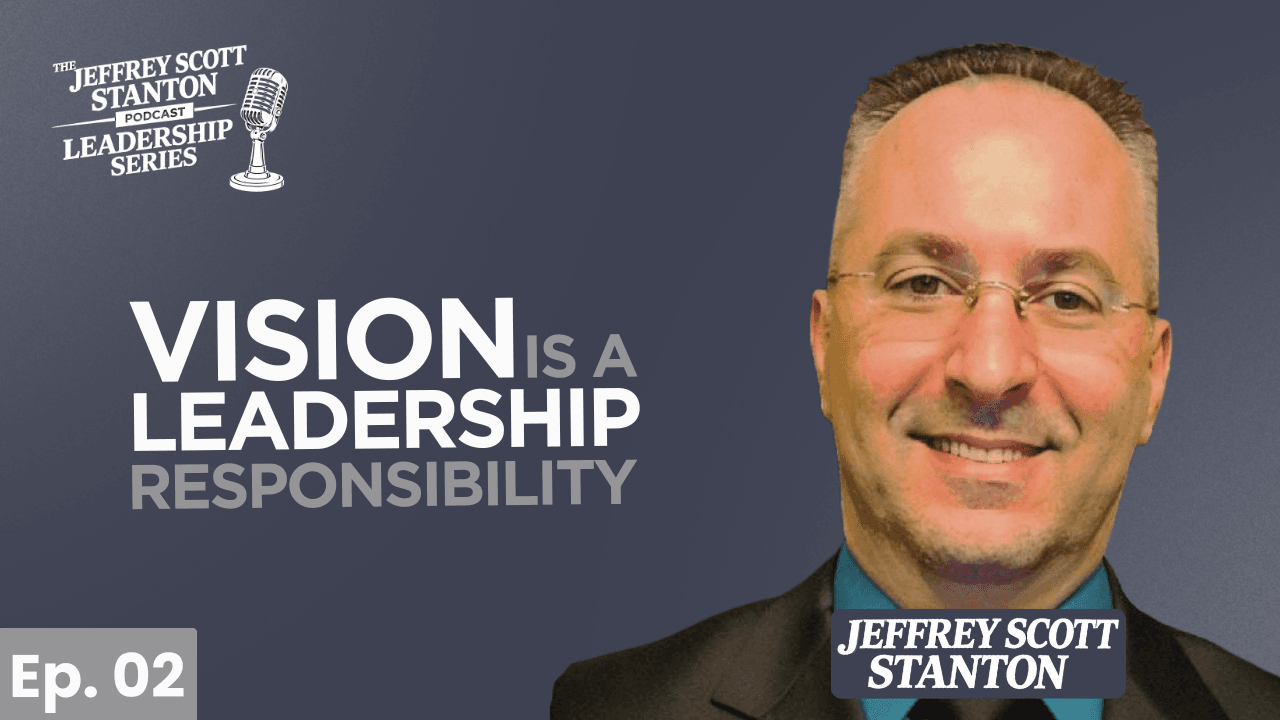
That story opens Episode 2 of The Leadership Series, and Jeffrey Scott Stanton uses it to make a point that most leaders underestimate: the cost of a weak vision is not theoretical. It shows up in turnover, disengagement, fragmented culture, and top producers quietly reconsidering their options. Vision is not a leadership nice-to-have. It is the leadership responsibility that makes everything else possible.
What Vision Actually Is (And What It Is Not)
Most leaders confuse vision with motivation. They deliver an energizing speech at the January kickoff, post the slogan on the conference room wall, and assume the message has landed. Three months later, the same team is pulling in different directions, unsure of what matters most, and performing below what their talent should produce.
That is not a talent problem. It is a clarity problem.
Jeffrey is direct about what vision is not. It is not a rally cry. It is not temporary excitement. It is not something you mention once a year and expect to compound into alignment. Vision is what people experience on a daily basis, repeatedly, through the decisions that get made, the behaviors that get rewarded, and the standards that get enforced or quietly ignored.
"Your organization always believes the lived experience over the spoken message. Always."
— Jeffrey Scott Stanton
If the stated vision is excellence but the daily experience is inconsistency, people believe in the inconsistency. If the stated vision is a strong culture but politics dominate decisions, people believe in the politics. The gap between what leaders say and what teams experience is where credibility quietly erodes.
The Hidden Cost of Drift
Organizations rarely fail dramatically. They fail through drift. Meetings keep happening. Transactions keep closing. Revenue might even tick upward. But underneath the surface, effort becomes fragmented. Different managers emphasize different things. Different teams define success differently. People are working hard, but they are not working toward the same destination.
Jeffrey calls this one of the most expensive leadership problems in existence. Not laziness. Misalignment. Activity replacing direction.
"Busyness can hide confusion for a long time. And confusion is truly expensive."
— Jeffrey Scott Stanton
The drift goes unnoticed until morale drops, performance slips, or a strong performer who seemed settled starts taking recruiting calls from a competing firm. By then, the vision problem has already been expensive for months.
The warning sign is straightforward. Ask five people in your organization where the company is going. If you get five different answers, vision is missing. If the answers are aligned, leadership is present. That test applies at any level, from a solo agent thinking about their own business to a broker running a team of forty.
In Real Estate, Vision Is Not Optional
The stakes of clear vision are particularly high in real estate because the people most leaders are leading are independent contractors. They have options. They can stay or leave. They can produce while being mentally disengaged. They can stop attending meetings, ignore systems, and quietly explore other opportunities while technically still on the roster.
That environment makes title-based authority irrelevant. A leader in real estate cannot rely on policy or position. The only things that hold people are trust, credibility, and clarity about where the organization is going and what role they play in it.
"Titles may create compliance in certain organizations. Vision creates commitment. And commitment is what most people give when no one is watching."
— Jeffrey Scott Stanton
Jeffrey draws a sharp distinction between why people join and why they stay. Agents may join for a split or an opportunity. They stay where momentum is real, where growth feels possible, and where they can see their own future inside the organization's future. When that belief collapses, every minor inconvenience becomes a reason to leave.
Top producers, Jeffrey notes, rarely stay for splits alone. They stay where vision is clear. And when vision is absent, even competitive compensation stops being enough.
When Leaders Disappear: The Cost of Silence Under Pressure
Jeffrey describes a manager he watched during a period of organizational uncertainty. Performance had slowed. Morale was shaky. People had questions. Instead of stepping forward with direction, the manager went quiet. The office door stayed closed. When the team finally heard from them, it was criticism about what everyone else was doing wrong, not direction about where the organization was heading.
The outcome was predictable. Rumors spread. Trust evaporated. Strong performers stopped investing in the environment and started investing in finding a new one.
The lesson Jeffrey draws from that experience is one of the most practical in this episode. When uncertainty rises, silence from leadership gets read as weakness. Leaders do not need to have every answer. They need to be present, honest, and consistent. Confidence is created through visibility, not through having solved everything.
"Criticism without clarity destroys your credibility. True leaders don't disappear when people need direction most. They step forward."
— Jeffrey Scott Stanton
Vision Must Be Translated Into Daily Behavior
One of the most common places leaders fail on vision is in translation. They can articulate the destination but never connect it to what people should do differently today.
If the vision is growth, what specific behaviors create growth? If the vision is excellence, what does excellence look like in how the receptionist answers the phone, how an agent handles a difficult client situation, how a manager runs a one-on-one? If the vision cannot be seen in daily actions, it remains abstract. And abstract vision never changes performance.
Jeffrey offers a practical approach to making vision visible without it feeling like a lecture. In meetings, do not just review the numbers. Explain why the numbers matter in the context of where the organization is going. When recognizing performance, do not only reward production. Recognize the behaviors that reflect the culture being built. When someone handles a client problem with professionalism, name it. When someone mentors a teammate, call it out. Those moments are vision being communicated in real time.
In one-on-one conversations, help people connect their personal goals to the larger direction. Show them where opportunity exists for them specifically inside the organization's future. People stay when they can see a version of their own growth inside the bigger picture.
Repetition Is Not Redundancy
One of the most common fears Jeffrey hears from leaders is about repetition. They worry that saying the same things too often makes them sound like they are stuck on a script.
He addresses this directly with a principle from learning science. The average adult needs to encounter something at least three times before it registers as important. The first time, it is largely ignored. The second time, it registers as a coincidence. The third time, the listener thinks: this must matter because I keep hearing it.
Most leaders stop communicating their vision just as the team is starting to absorb it. They move on to the next topic, assuming the message has landed, while the team loses the thread. Vision requires repetition tied to clarity, tied to examples, tied to recognition, and tied to decisions. Every time a leader connects a choice back to the direction the organization is building toward, vision is being reinforced.
Standards Are How Vision Becomes Believable
Vision without standards is, in Jeffrey's framing, just fantasy. A leader who says they want excellence while tolerating mediocrity sends a clear message to the team. A leader who talks about culture while rewarding dysfunction tells everyone what the real culture is. A leader who speaks about growth while avoiding accountability conversations signals that growth is optional.
What an organization rewards is louder than anything a leader will ever say. What the team observes and experiences daily is more credible than any kickoff speech or wall poster. This is why the standards a leader sets and consistently enforces are how vision becomes something people actually believe in, rather than something they politely nod at.
Jeffrey leaves leaders with a four-part test for evaluating whether vision is functioning or failing in their organization:
- Is the vision clear?
- Is it repeated consistently?
- Is it rewarded through recognition?
- Is it believable based on the daily actions that actually happen?
If any one of those elements is missing, vision weakens. If two are missing, confusion grows. If three are missing, people stop listening and start defining their own version of success within your walls or somewhere else entirely.
The Monday Move: A Single Question
Your Monday Move: Before the next episode, ask five people around you one question: where are we going? Listen carefully to what you hear. If the answers are aligned, that is leadership working. If the answers are scattered or vague, that is the work. You do not need a new strategy or a new slogan. You need to clarify, repeat, and reinforce the direction until it shows up in how people make decisions every single day.
Listen & Watch the Full Episode
Jeffrey Scott Stanton breaks down why vision is the leadership responsibility that makes everything else possible on The Leadership Series. Available on YouTube and all your favorite audio platforms — Apple Podcasts, Spotify, Amazon Music, and more. New episodes every Wednesday.
About Jeffrey Scott Stanton
Jeffrey Scott Stanton is a Master NLP Practitioner, Behavioral Strategist, and Executive Advisor. Former EVP of Learning & Development at Douglas Elliman Real Estate. He hosts The Leadership Series on J Squared Podcast Productions, a leadership academy in podcast form built for brokers, managers, and high performers responsible for results through others.
- Website: jeffreyscottstanton.com
- LinkedIn: linkedin.com/in/jeffreyscottstanton
Work With JMan
Bring this energy to your team or event.
JMan speaks, trains, and builds AI strategies for businesses that want to move faster. See how he can help yours.
Visit jmanai.com →